stretchoid.com speed test — 20 Oct 2026
Measured from the wfix.shop server on 20 October 2026 at 14:42 UTC. Grade B (81/100), with the screenshots, the timings and the fixes that matter.
Where the first byte went
- DNS lookup 51 ms 22%
- TCP connect 40 ms 18%
- Server wait 138 ms 61%
Measured on the connection that fetched the HTML. Every other request on the page waits for the end of this bar before it can start.
How this page compares
Every report published here is in this comparison, so it is a reference population of pages tested from one server - not a benchmark of the whole web.
What these numbers mean
- The first byte arrived in 228 ms. That is workable, and the cheapest win left is caching or a warmer connection.
- The page transfers 234.8 KB over 5 request(s), which is lean. Images files are 84% of it, so resize and recompress the largest images before anything else.
- It runs over HTTP/2, so the assets share a connection instead of opening one each.
- The largest element painted at 568 ms, inside the 2.5 s Google calls good.
- Layout stayed still (CLS 0.001), so nothing jumps under the reader's cursor.
Fix first: Image delivery and format - Serve WebP or AVIF with a JPEG fallback, size images to the space they occupy, and lazy-load anything below the fold. Images are usually more than half of a slow page.
Read on one shared server, not a visitor's phone: use it to compare pages against each other, not as a promise about every connection. We fix what these tests find.
Screenshot
What the page looks like
Loaded in headless Chromium on this server. Click an image to open it full size.

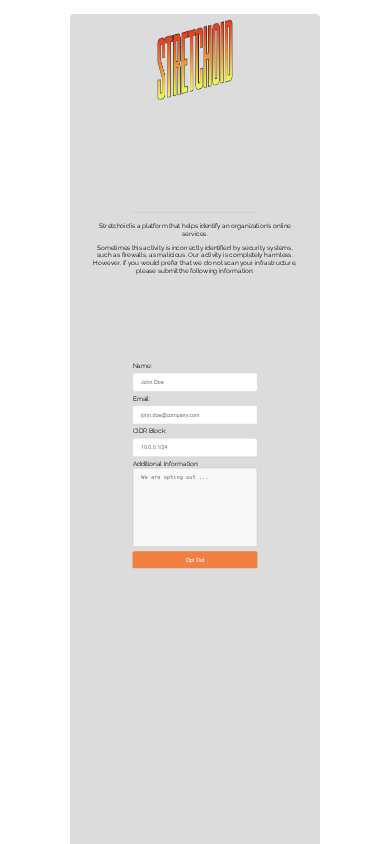
Browser render
The same URL loaded in a real browser, so these are the readings curl cannot produce. The grade above is still built from the server measurements.
Page weight by type
What the page is made of
Transfer size, compressed as sent. 5 request(s) in total, 234.8 KB across all of them.
Top issues
Image delivery and format
high impact1 image(s) over 200 KB and 1 large image(s) still served as JPEG or PNG.
Fix: Serve WebP or AVIF with a JPEG fallback, size images to the space they occupy, and lazy-load anything below the fold. Images are usually more than half of a slow page.
Render-blocking resources
high impact3 render-blocking resource(s) in the document head (1 script(s), 2 stylesheet(s)). The page cannot paint until each one arrives.
Fix: Add defer or async to scripts that do not change the first paint, inline the critical CSS, and load the rest with media="print" plus an onload swap.
Cache static assets
medium impact2 asset(s) answer without a Cache-Control max-age, so browsers revalidate them on every visit.
Fix: Version filenames on change and serve them with a long max-age plus immutable. That is what makes a returning visitor fast.
Mobile viewport
medium impactNo viewport meta tag, so a phone renders the desktop layout scaled down.
Fix: Add a viewport meta tag with width=device-width and an initial scale of 1.
Strict-Transport-Security
low impactHSTS is not set, so the first visit on a hostile network can still be downgraded to HTTP.
Fix: Send Strict-Transport-Security with a max-age of at least six months. Add includeSubDomains once every subdomain is HTTPS.
Waterfall
Slowest requests
Each bar is one request's own response time, scaled to the slowest. Assets were fetched in parallel, so the bars overlap in real time rather than stacking. first party third party
| Request | Type | Status | Time | Size |
|---|---|---|---|---|
| https://stretchoid.com/logo.png | images | 200 | 5.12 s | 196.5 KB |
| https://stretchoid.com/index.css | css | 200 | 5.12 s | 1.6 KB |
| https://fonts.googleapis.com/css2?family=Raleway&display=swap 3rd party | other | 0 | 5.12 s | 0 B |
| https://ajax.googleapis.com/ajax/libs/jquery/1.12.4/jquery.min.js 3rd party | javascript | 200 | 228 ms | 33.2 KB |
Report this page
Run this test on your own site
The same engine, free, with the screenshots and the fixes. No account needed.